Summer 2026
Fishing report for the South holston River, the watauga river, and the French Broad River
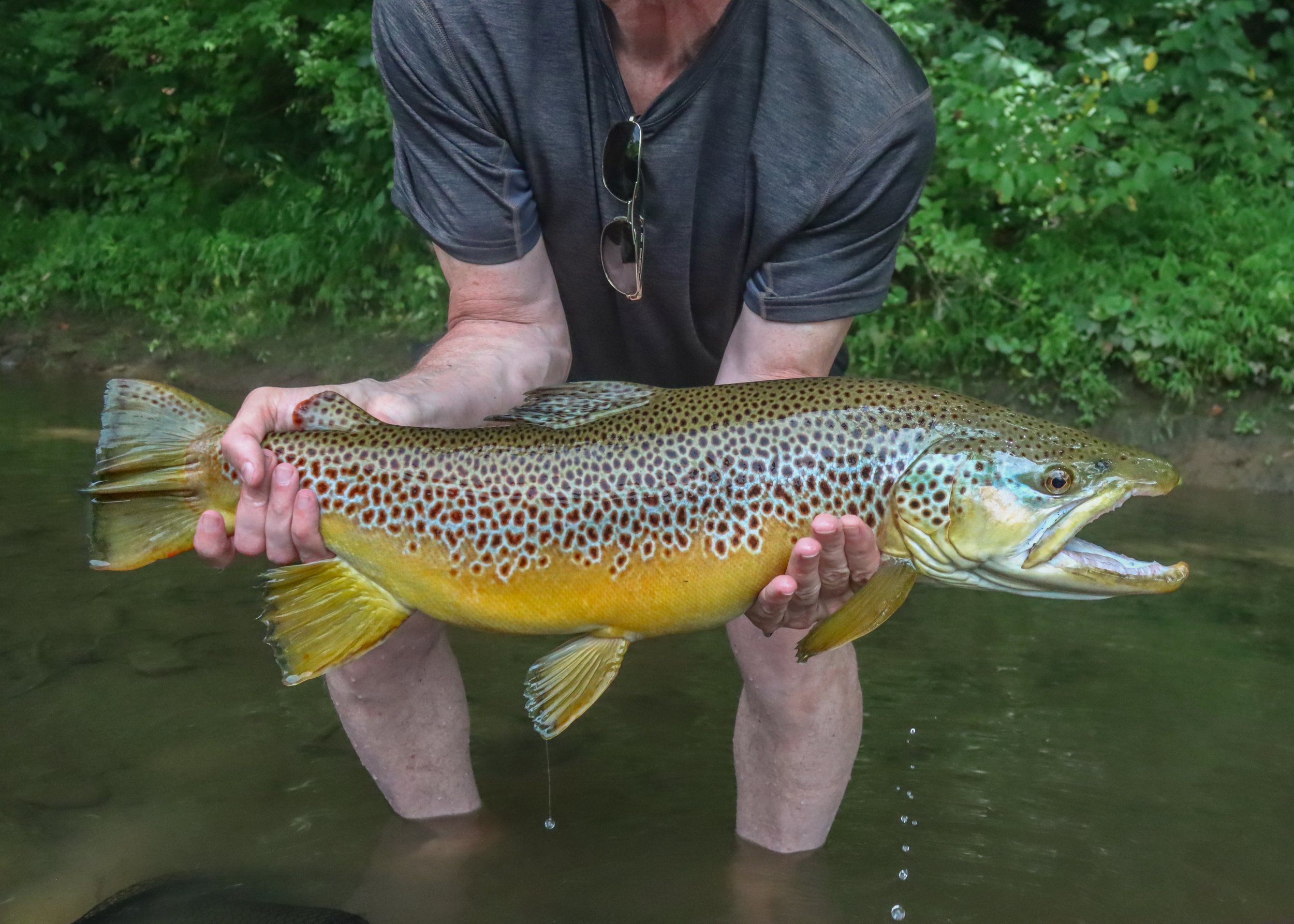
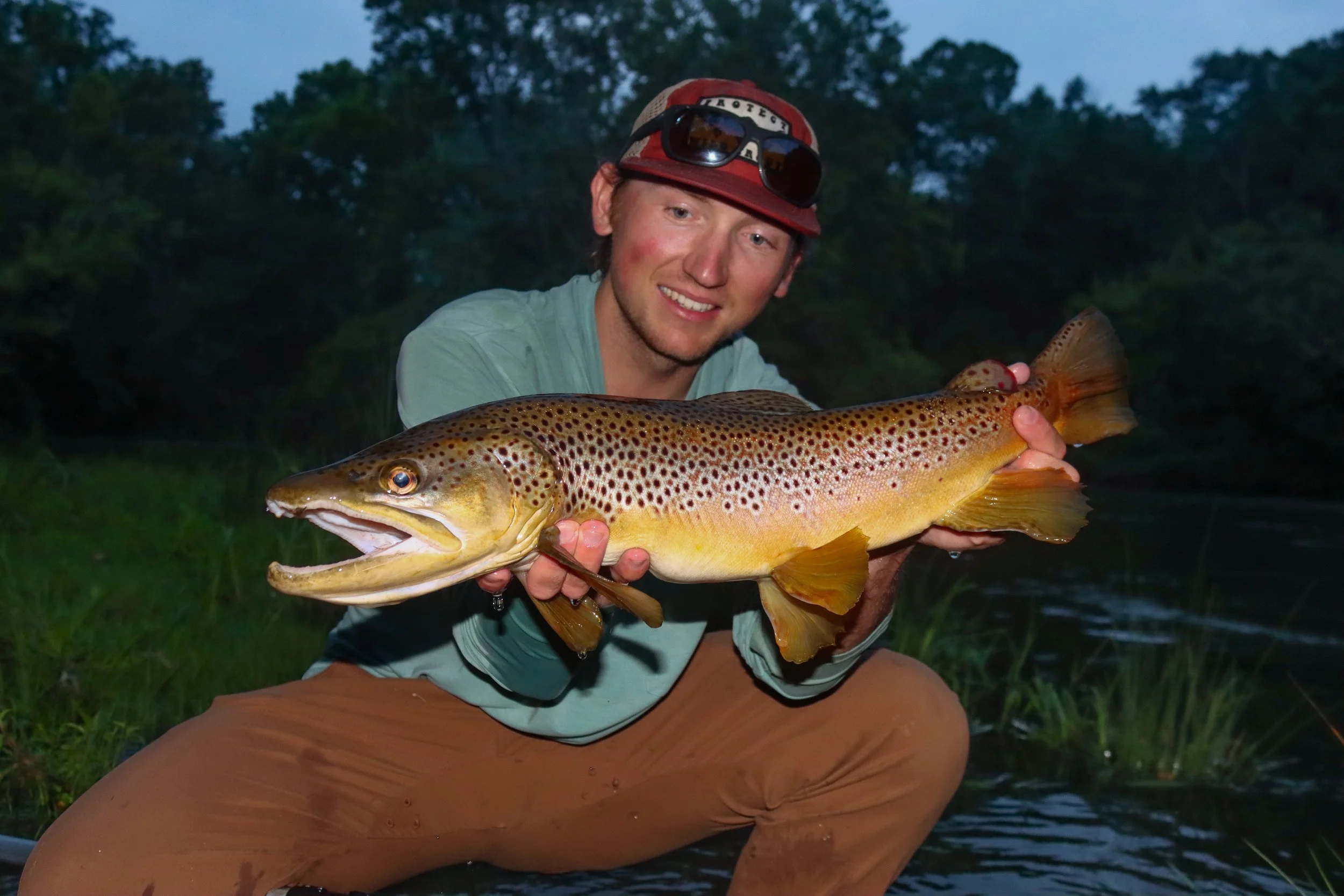
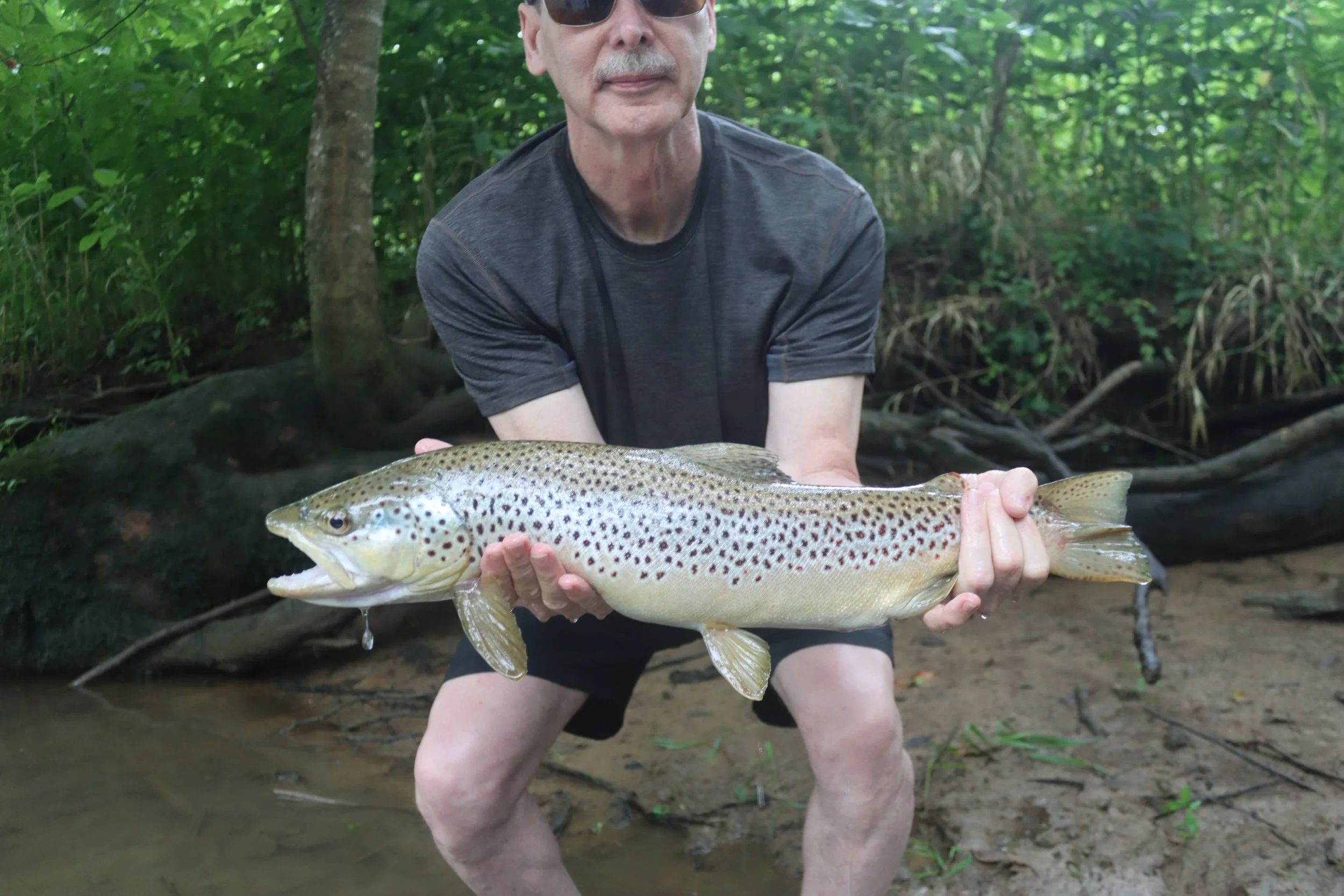
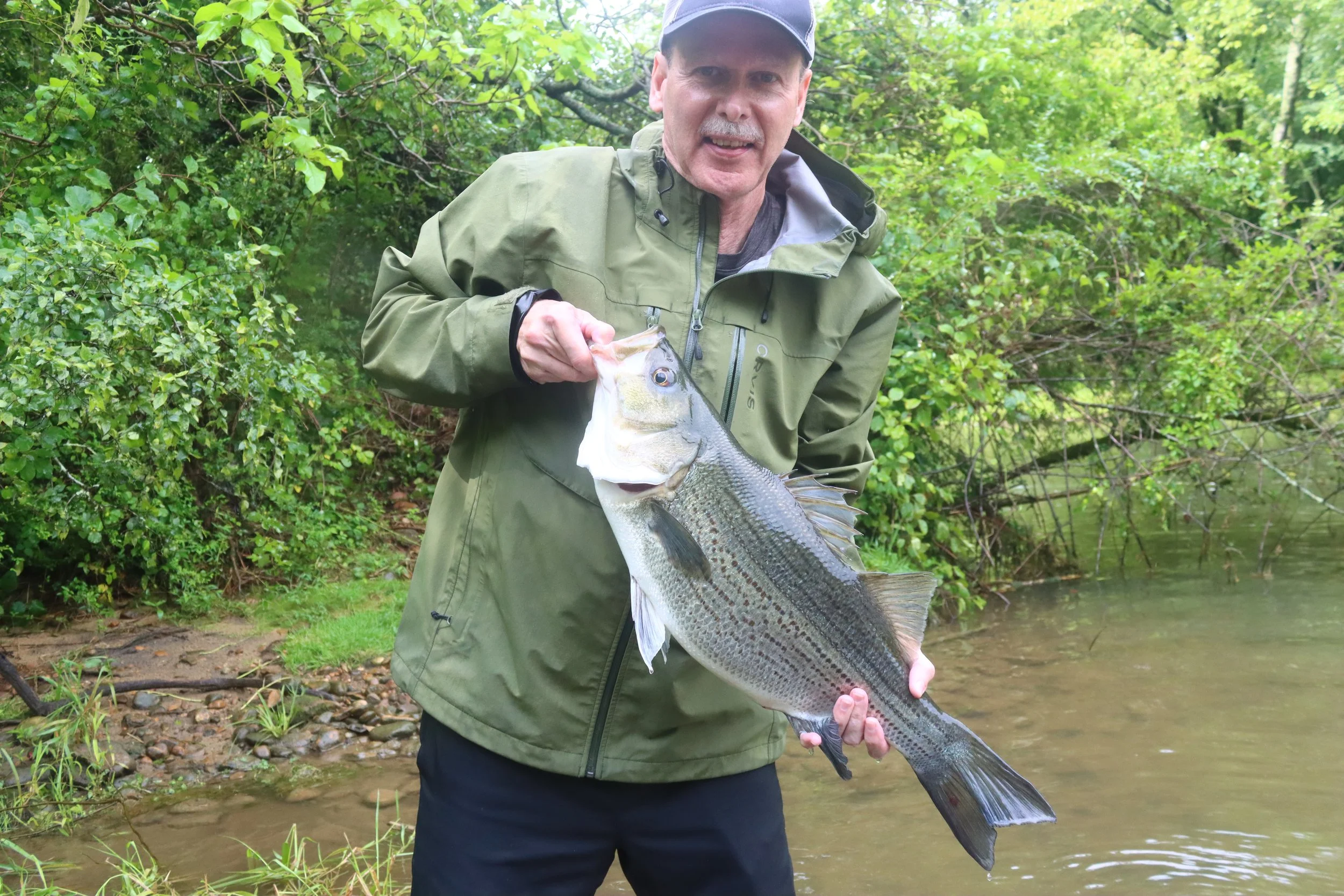
My consistency in updating this has been anything but consistent. 2026 has been a great year, from post-spawn winter fishing, through the spring and now into summer. I’ve included a few photos of this year’s progression from winter to spring to summer.
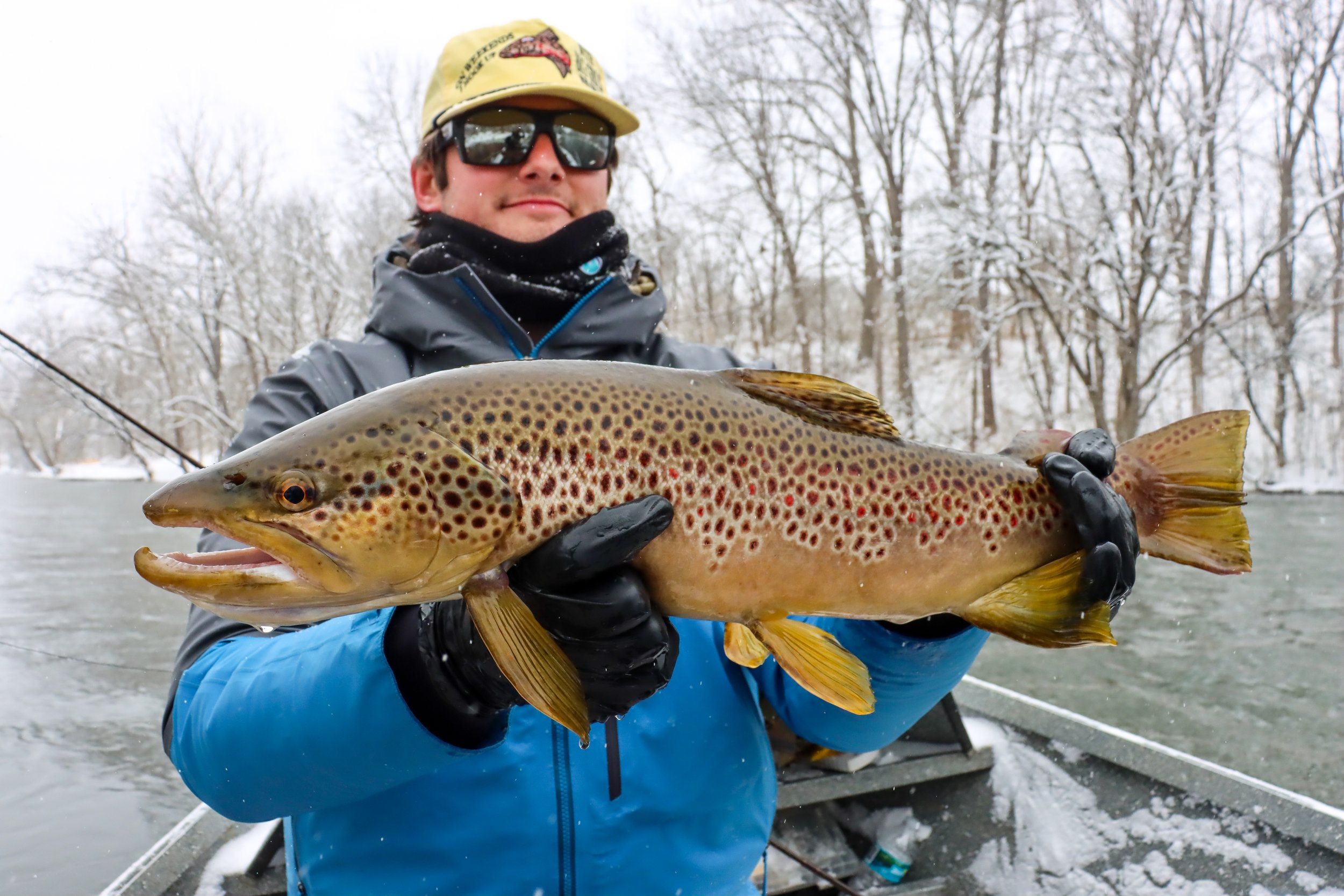
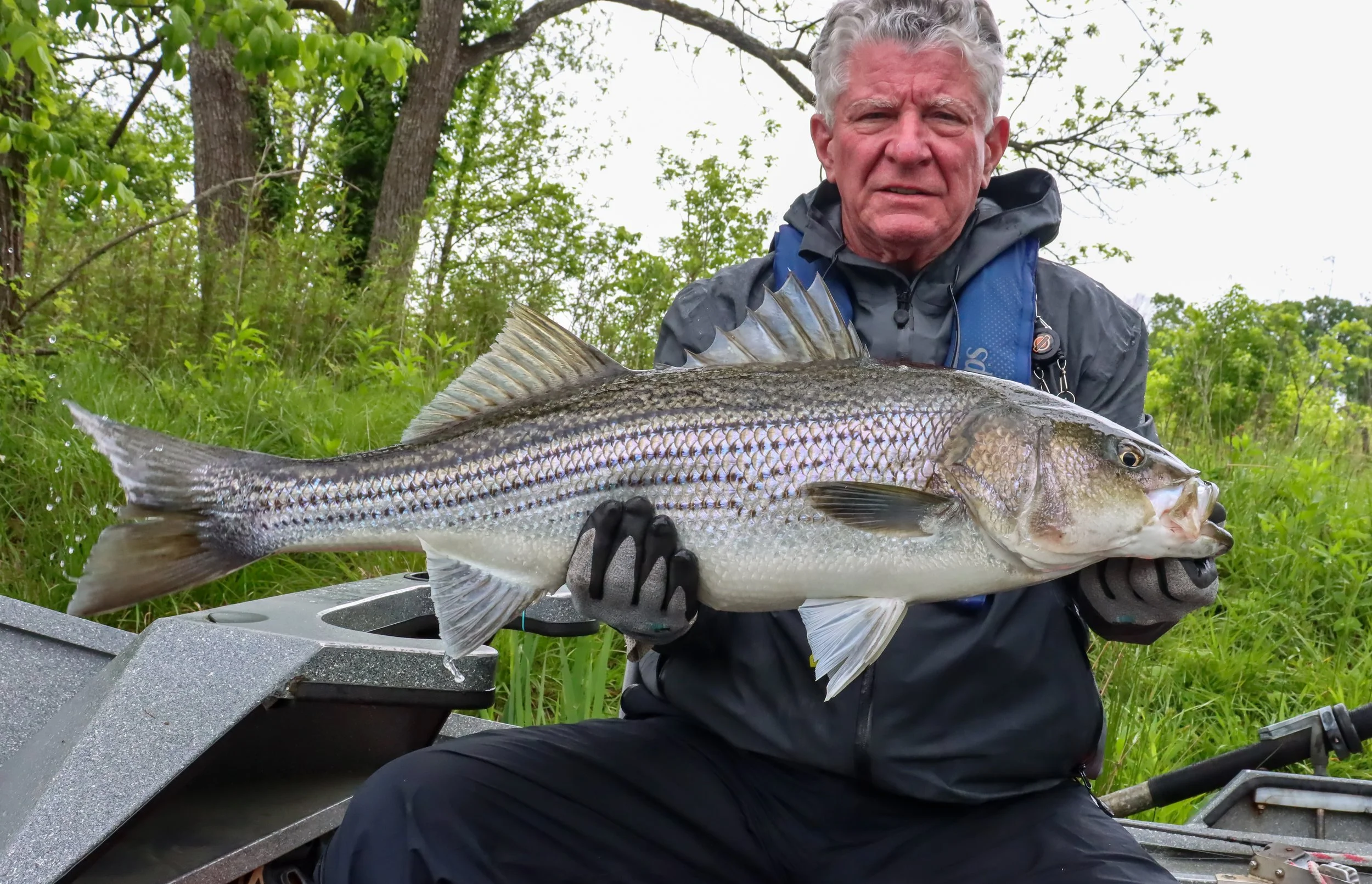
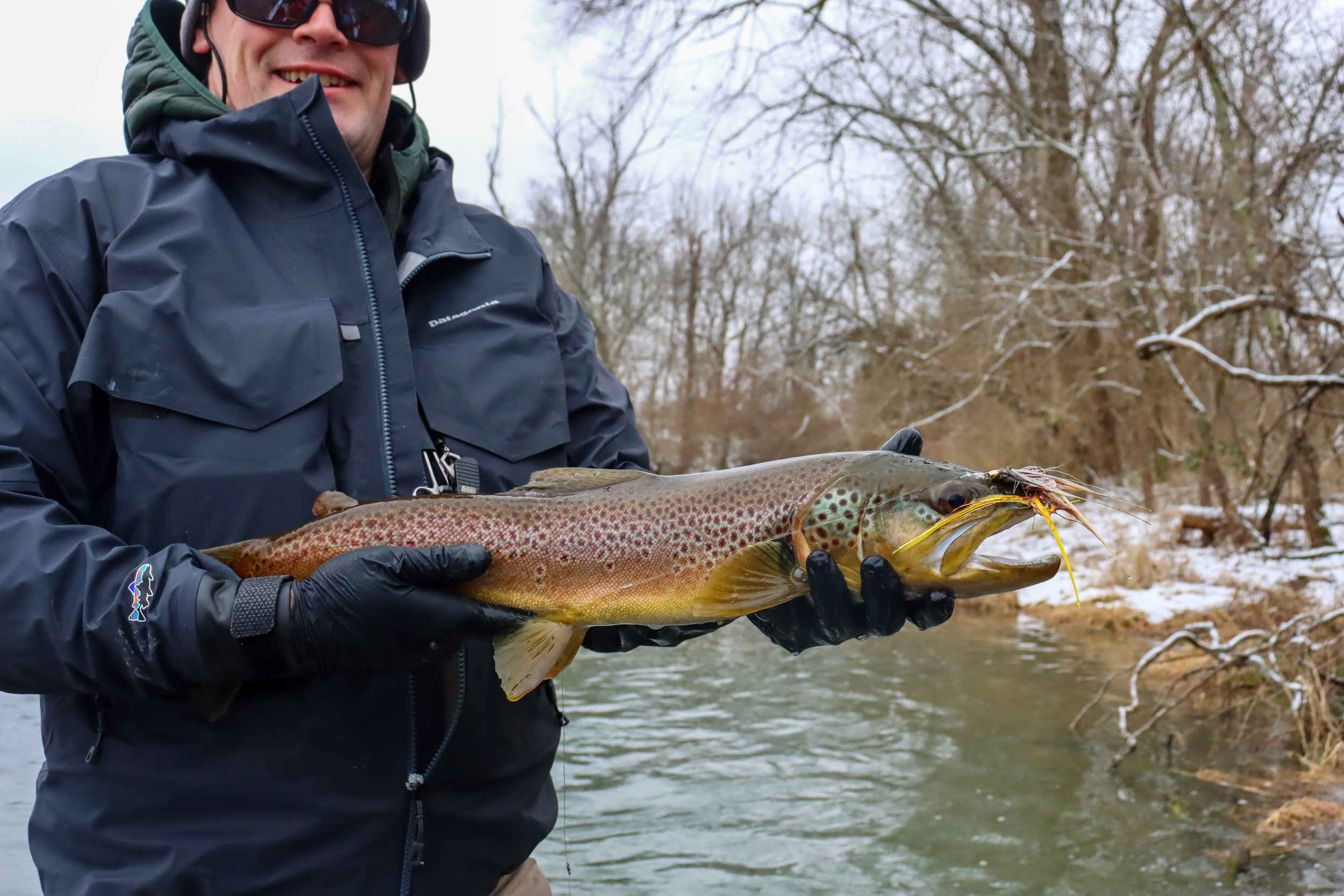
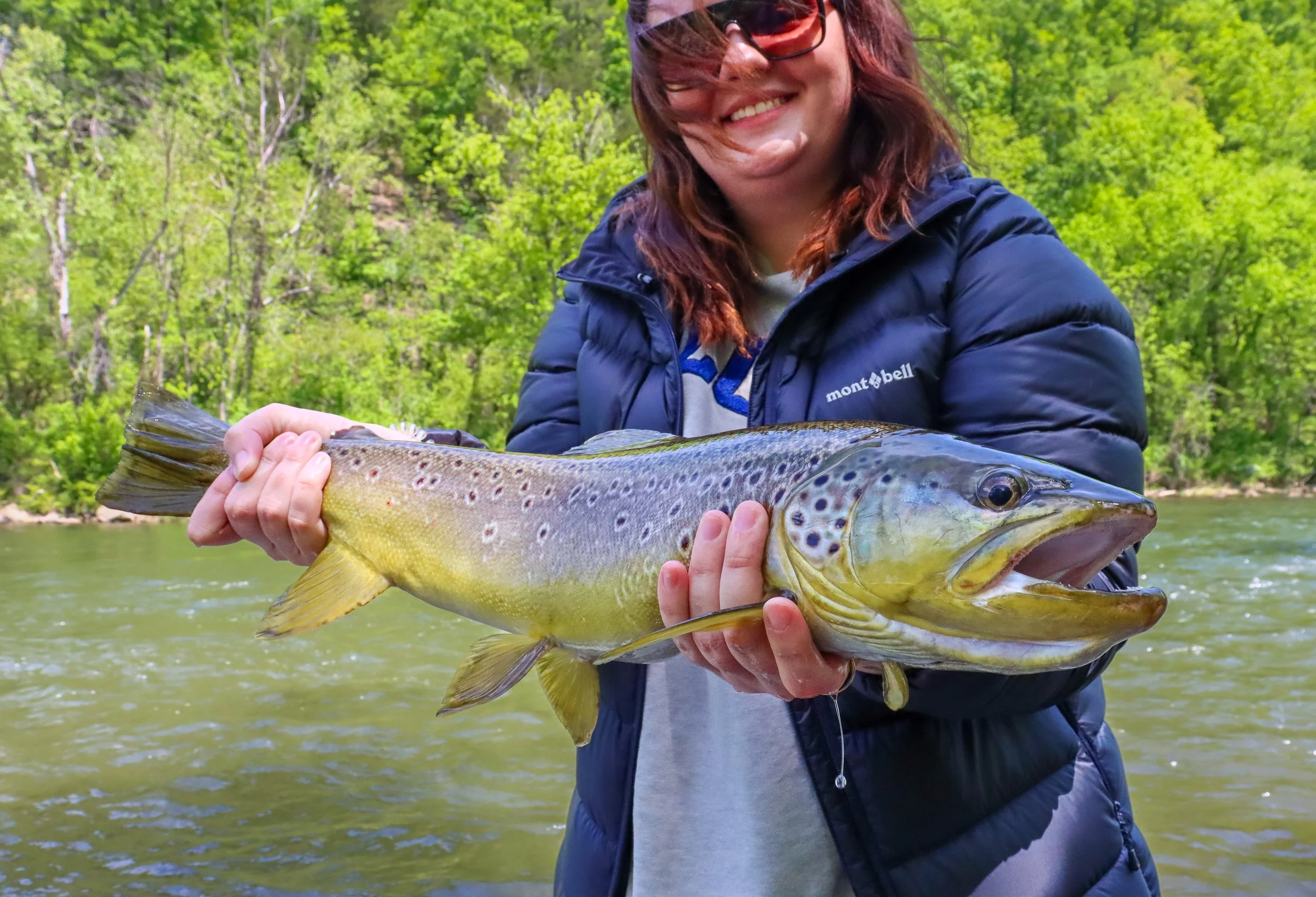
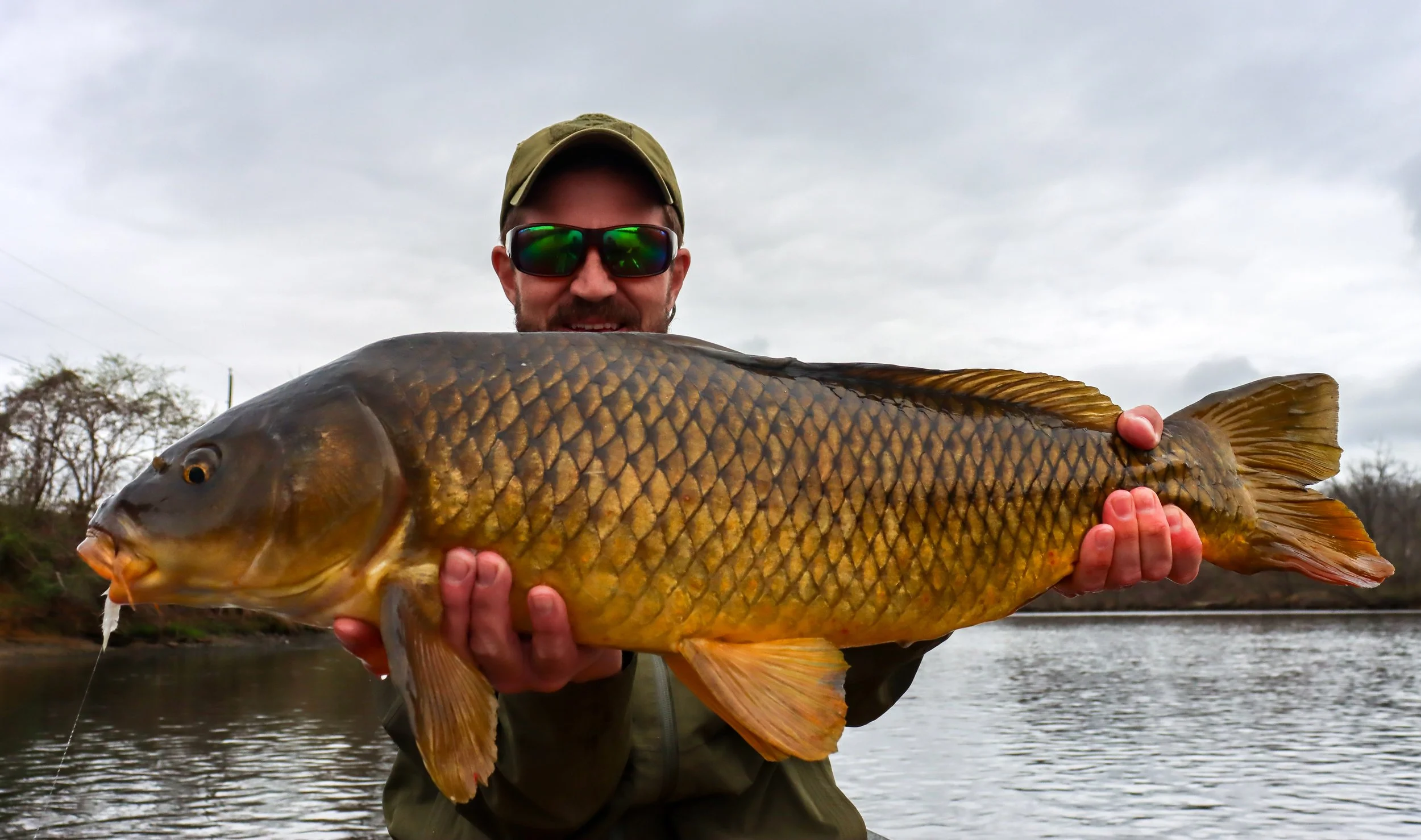
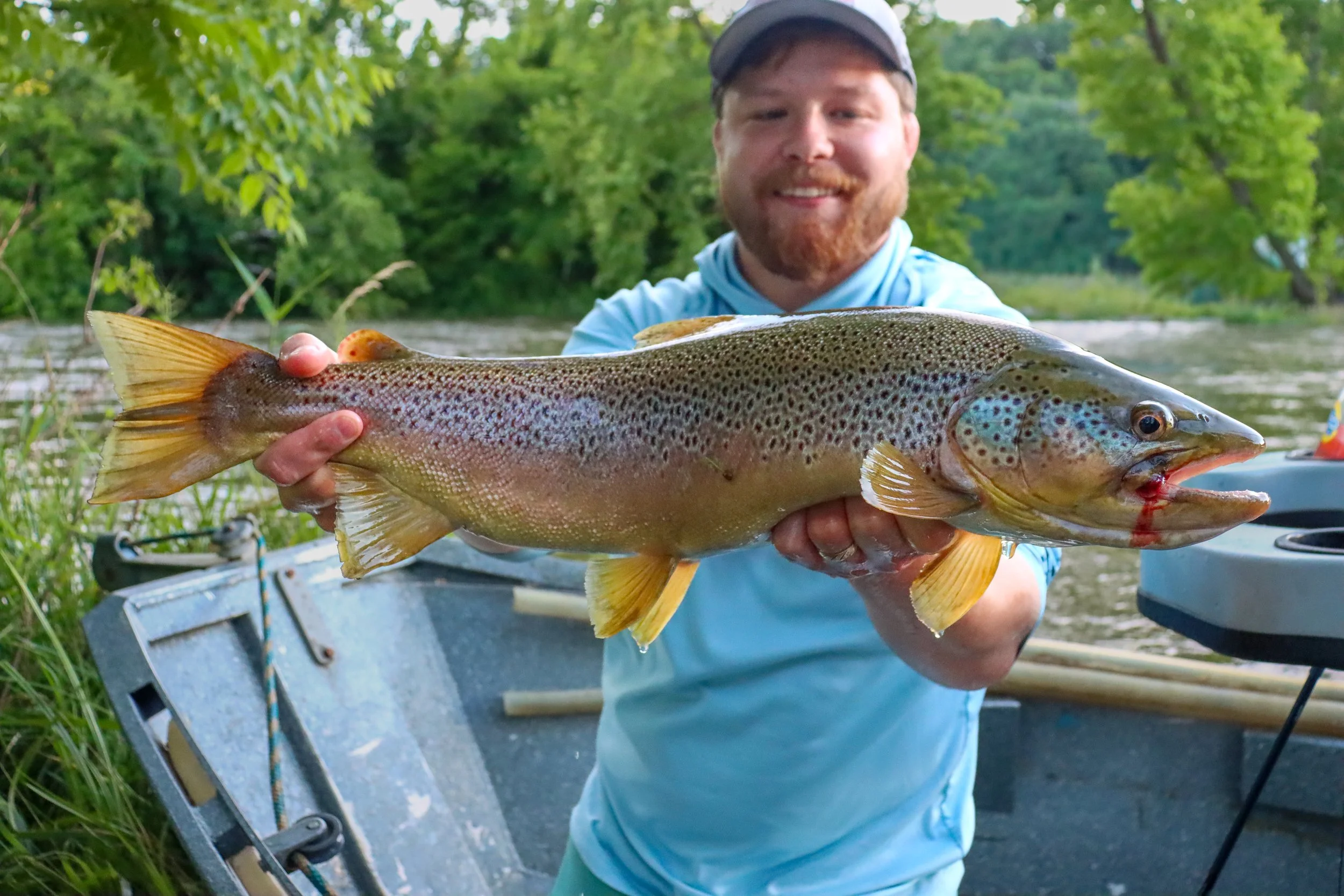
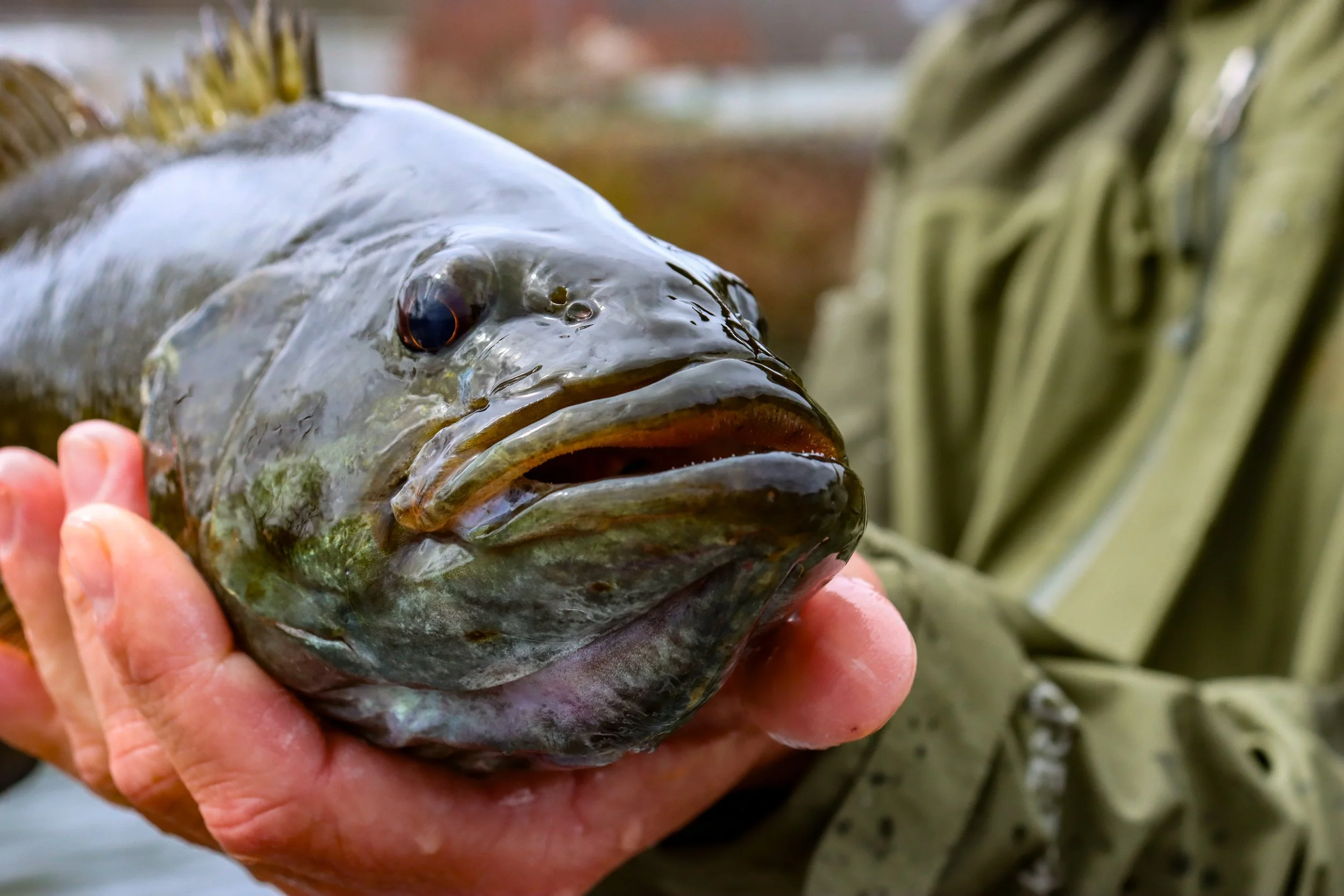
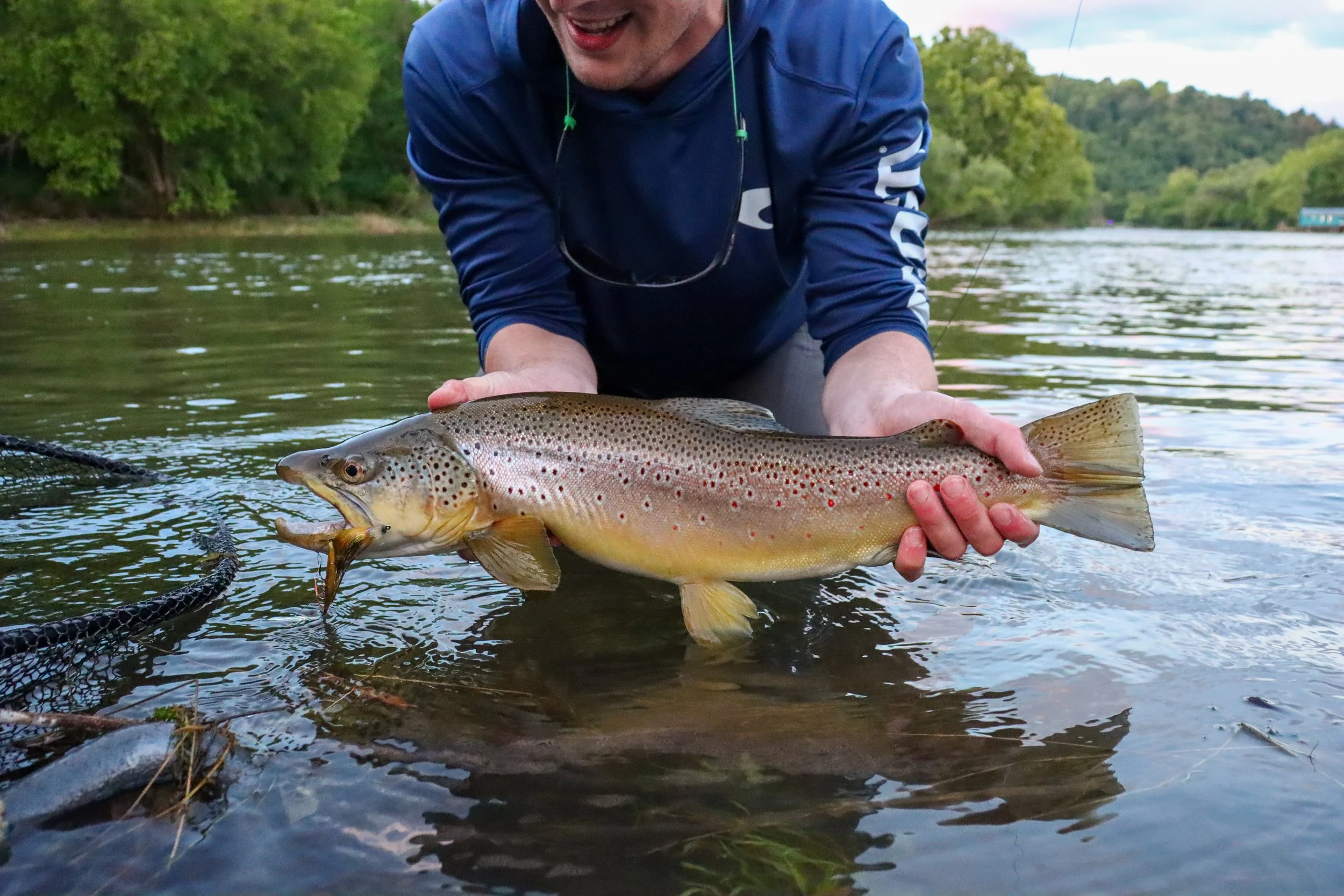
Fishing in June in July has been a nice return to semi normalcy on the tailwater trout front. We have been in a significant drought for 2025 and 2026, and are only now climbing out of it, which doesn’t happen with a few storms.
The watersheds feeding the South Holston Lake and the Watauga Lake received, on average, 40% less precipitation measured over the last 12 months. Think of it this way: there are no rivers above the South Holston or the Watauga tail Waters that rival either of these Rivers in size or in flow. There are some good streams that can certainly get going with a lot of rain, but they aren't the big Southeast tailwaters that we all know, that I float down in a boat. The combined input from all the creeks feeding the reservoirs has to surpass the output of the reservoir dam, which we would call our releases or generation. This must be the case many times over in the spring, as winter lake levels, typically between 10 and 30 ft below summer lake levels, will be adjusted between March and June, the reservoirs filling up to summer pool being the goal. When we are in a stable place, all the estimates and forecasts are within ranges of normalcy, a decent amount of rain will result in a decent amount of release from either or both of the dams. We have received more rain in the last month than we have all spring, and without looking at data, very possibly more than the last year total. South Holston has not adjusted any of their flows, and is releasing enough water to keep the river healthy, provide for short floats and low water fishing, but those releases should be considered more pulses, lasting between 1 and 3 hours, some of which is taking place in the middle of the night. During the summer, the Watauga releases 1700 cubic feet per second, or cfs, between 1 and 6:00 p.m. 5 days a week, and 3,300 CFS from 12:00 to 5:00 p.m. on Saturdays, with a tapered 1700 CFS for an hour before and after. When we get a lot of rain, that 1:00 to 6:00 p.m. adjusts accordingly, with releases starting earlier or later and adding to the one to six. None of that has been adjusted. Watauga lake, the South Holston lake, and Boone lake, the reservoir that is the recipient of the Watauga and the South Holston tailwaters, are all just reaching pool level two months late, so despite all the rain, our releases are still paying for the drought. The implications of precipitation and regional drought to the extent that has been experienced by most of the East Coast, and certainly the southeast, are felt both when it is happening, and for months after, if not longer, when you look at it through the lens of the tail water and reservoir management system across the state of Tennessee.
I imagine in the next month, we will be getting some healthier releases on the South Holston, and the Watauga afternoon release will begin to extend into the morning as well.
Okay enough talk about water, even though that is legitimately the most important condition dictating how you're fishing, be it with a guide or on your own. Bug behavior, fish behavior, sections that are floatable and wadeable... everything is at the mercy of these giant tailwater releases relative to their small flows when they are not releasing water. I personally prefer high water, with all of the fishing that one can do having their place and, specifically, their places on both rivers.
On the nymph in front, it's nice to be able to get away with some bigger presentations on tippet that is not 6.5 x. I try to maximize the wiggle in whatever fly I'm fishing - streamers nymphs or dry flies – which means dropping tippet size so that the fly is the thing controlling how drag, sink rate, or buoyancy is impacted by its relationship with the water. When fishing a fast dropping size 16 tungsten headed, slim profile sulfur nymph, it will drop fastest on its own, but if it has to pull down tippet as well, it will drop at a slower rate. Not to say there is an exact science behind this, but when you want to fish deep and you are fishing those bigger and heavier flies, adjusting for the depth is significantly more predictable and repeatable than trying to adjust for how long it takes sink. This also results in easier casting, because you aren't inserting split shot into the system, which is a borderline requirement when fishing the tiny bugs with any depth. Even when you are fishing perdigons and other very slim, fast sinking flies with oversized tungsten bead heads, the inclusion of a few feet of 6.5x tippet above or between a size 20 or 22 nymph impacts their wiggle and their sink rate much more than the same length of 6x will impact a size 16 nymph of the same style and proportions. Without the hinge points of split shot, casting just feels a little bit less clunky. Some of these things matter very little, and can be overcome by mending or adding split shot regardless, but the little things tend to add up over the course of 8 hours. While I do significantly less nymphing than dry fly fishing, streamer fishing, and mousing, it can be an extremely effective way target brown trout and rainbow trout on both the South Holston and the Watauga rivers. That said, I started my fly tying journey with small nymphs, and I still tie hundreds for my good friend and fly shop owner John at tailwater fly company in bluff City at the mouth of the South Holston river, so I have a soft spot for nymphing despite preferring other techniques.
One of the reasons I nymph so infrequently, is because we have the opportunity to find and fish water where streamers are viable option. Here's the thing with streamer fishing: it's fun. Yes, we want to eat, we want the big fish, we want the quick flash and a slow thumping head shake that looks and feels more like a muskie as the fish get over 20 in. So, yeah, obviously we want that. In order to get there, there's a whole lot of casting and retrieving without any feedback from the fish. Some days are more active than others, but even when we go an hour or two without seeing anything, some days especially when that is the case, our odds of seeing a special fish get to the net are just as present as ever. I've worked hard to understand these Rivers and how brown trout behave as it relates to streamers on the fly side, and lures on the spin side, in order to build a knowledge set from the angler perspective so that I can tie and guide in a way that translates directly to the people in my boat who are the ones fishing. How a fly casts, it's air resistance, it's sink rate, how it swims, how it shows up in the water given certain conditions, which may change from bank to bank or from section of river to section of river...all of that influences how we are fishing - retrieve speed, selection of fly itself, sometimes leader length, and oftentimes the entire set of data results in fishing certain stretches on one day, and rowing through others, well the next day, with a new set of conditions - primarily dramatic changes in flows and in water clarity - our approach may be inverted for a lot of the river, rowing through water we would have otherwise fished hard the day before. This has remained true throughout this summer, between no generation and muddy water, clearer big water which is roughly 2,000 CFS ( 2200 CFS on the South Holston as an average "on" release, 1700 CFS on the Watauga), and really big off color water, specifically on the Watauga on Saturdays when they are releasing 3,300 CFS for the recreational Whitewater from 1:00 p.m. to 5:00 p.m. . This is a flow that feels daunting on both sticks, the oars and the fly rod. On these days our approach and mindset is as close to musky fishing as it gets. The fishing is routinely slow, and hard, but I have seen more truly big trout, and when I say that I'm talking about trout 25 inches and up. When a 20-in fish screens out of a bank and slams into your fly, it's really easy to get back into the swing of fishing after a couple hours of hard work and no pay. When a 23 or 24 in trout slams into your fly and it doesn't make it to the net, it's heartbreaking, but that typically means we're in a good zone and there is a bite window, not to mention someone is fishing well and fishing hard, so we tend to forget the slow fishing pretty quickly in this instance as well, even when it stings. If a fish that is over 25 slams into your fly and does not make it into the net, that's probably going to be something that you remember for the rest of your fishing days. Of course landing these fish will also be something you remember, and in both scenarios it is that heart stopping moment of the predator you have been hunting showing itself that is so exhilarating and so fun, and so unique, as it is only experienced by people doing what we are doing - willing to forego more smaller fish and watching an indicator drop, even when there is a chance one of those might be a big fish, in favor of the hard thing. Metaphors for Life exist all over the place in fishing, and I have found that that is the case even more so in guiding. We have the opportunity to not learn something new, to stay in our comfort zone, to do the thing that we know is going to work, and to remain content. We also have the opportunity to learn something new, to experience that feeling of being bad at something, and experience the satisfaction and confidence that comes with improvement. For a lot of beginners, what I just described may very well be achieved through nymphing, learning how to cast small dry flies, different presentations and techniques within both of those small bug operations. For those who have been fishing for a while, or for those who like to fish for smallmouth, anything in the salt, and bigger predators like striper or muskie, learning how to effectively and consistently fish streamers is an investment in themselves, and in their hobby, passion, whatever you want to call it, that is well worth trading in two dozen stocked rainbows. Add to that the very real possibility of seeing and experiencing that special moment of a rare wild predator brown trout eating that thing that's attached to the end of the line you are holding in your hand... While it isn't for everyone - which is why, as a guide, I have ensured I am well versed in everything from nymphing to dry dropper to fishing spin gear - I have found that for a certain type of person and angler, streamer fishing big water from a drift boat is as good as it gets.
Dry fly fishing has been on and off, and really only off when it's muddy from rain, or actively raining. Fortunately for flows, this has been the case for a good chunk of the last 2 months. We have good sulfur hatches on both rivers that persist through August, with blue wings and a variety of other insects ranging in size from the big sulfurs that are a 14 or 16, to the bulk of the population density, a small 16 down to a large size 20, then blue wings that sit within that same range of 16 to 20, 18s and 20s being the best bet. These bugs also show up and continue to get smaller as the months wear on, but for now it is a whole mess of fun to be fishing 16s or 18s, with the occasional inclusion of a dropper either lightly weighted or unweighted when the emerger eat is keeping them a little below the surface, but still visible. While I fish a variety of dry flies, my favorite imitations utilize CDC, two of which are the Puff Daddy, a South Holston River staple, and a few versions of cripples, which are a great way to keep your fly both under the water column in the back, while still on top of the surface in the front – the tail is sunk while thorax and wings are holding on to the meniscus of the water surface. Both of these CDC flies, and generally all tactics fly and otherwise, are equally effective on the Watauga, which has hatches that rival and are, on many days, just as prolific as any hatch on the South Holston.
Most days we are switching from the dry fly to the streamer rod and back based on whether or not we are seeing rising trout. While we are moving, we are fishing streamers, then we will anchor up and site cast to rising trout if I spot noses. These are all tactics employed during the day, which constitutes roughly 2/3 of our summer fishing from my boat. A lot of the trips this summer, we have been fishing streamers and dry flies starting around 4:00 or 5:00 in the afternoon, which is when the afternoon release gets down to the Middle River, and also when great hatches are happening, which is contrary to much of the accepted local mythology around these rivers. As the sun sets, we are going to switch our sinking lines used for streamer fishing in favor of floating lines for mousing.
Mousing this summer has been great so far, and we are nowhere near its peak. While we haven't landed any bruisers yet, we have managed to make one eat on most trips, with a half dozen healthy, smaller browns - under 20”, though the majority of the ‘numbers’ fish are in the 12-16” - finding their way to the net... converting and setting the hook on a mouse eat is something that requires patients and more than one try, and as the browns get bigger, their mouths get toothier and harder, so that patient set asks for more from the angler. Our mousing is done in the low water, either on the South Holston, that has not been releasing water, or on the Watauga after the afternoon release drops out. I'm excited for what August, September, and October bring on the mounting front, as that wing of my business continues to grow.
On the musky front, I have had a few trips in July, taking place on the French Broad in North Carolina, between Asheville and Brevard. Also contrary to much of the accepted lore, especially in the southeast, and very much within the fly fishing world, fishing for muskie in the summer here is not only a great time to do it, it is also comfortably within safe temperatures, as the headwaters of the French Broad remain in the low 70s on even the hottest days, and upper 60s if the nights get chilly or we get a few days of rain and overcast. For context, just a few River miles up from where we are fishing for musky, it is cold enough for trout to live, and there are multiple trout streams, including the well-known Davidson River, and the lesser known Mills River, that feed into the French Broad where we are fishing. We have been fishing conventional bait casting tackle, and as much as I love fly fishing and tying musky flies, I absolutely love fishing for those animals with big lures and bucktails and swim baits and oversized soft plastics. Fishing the French Broad for muskie means fishing into and around a lot of log jams. There are certainly troughs and pools we fish, but a lot of our fishing is right on top of or adjacent to logs that are going to grab onto a glide bait or bucktail and not let go, so one of my favorite presentations is a smaller to mid size floating musky jerkbait or crankbait that we can burn and wobble on the other side of a log or within a submerged log jam, then let float up and pull over structure slowly. It is also much easier to get these lures unstuck, as most of the time you just need to drop tension and let it float then give the line a little pop and it will come unstuck from whatever log it was on, as long as you have not buried the hook. This of course does happen, since after all, some of those log jams we can't see could very well be the musky we are looking for. We can add this to the file of “little things that add to big things, some which might not be apparent”
This is another wing of my business that I have been working on for years, fishing the river on my own for something approaching a thousand hours before starting to offer guided trips. This is the same approach that I took with mousing, which I started to offer after taking the same approach for streamer fishing and dry fly trips on the Watauga and the South Holston. We only do what I have personally done, we are only fishing where I personally no there are fish because I went out and fished and moved fish.
The anglers who have become clients and friends over the years, who have found me through YouTube or Instagram, especially those finding me through my fly tying, did not find me through a sponsored ad on the search engine or through my own manipulation of an algorithm, though those are two things that are now requirements in order to continue to build my business. The word of mouth and the people finding me through those organic channels have been my bread and butter and continue to provide for the most repeat business, with many of my clients fishing with me half a dozen times or more every year. While I hope to give those interested in fishing these Waters some insight into techniques and approaches that stray from the norm, I'm very much hoping to attract more of those same anglers – the ones who want to do the fun and engaging and rewarding fishing – by creating varied content, including this.
Thank you for reading, I hope to see you on the boat at some point soon, and if I don't, I hope you are able to use some information or knowledge within this or within the things I share on YouTube and Instagram, to enjoy yourself and your time on and off the water wherever and whenever possible.
You can listen to all episodes of my biweekly podcast fishing report with The Articulate Fly anywhere podcasts are availble, or find them at The Articulate Fly here
Spring 2025
Spring has gotten off to a pretty typical start: very few days are the same, as we are given inconsistent flows from the dams along with highly variable weather. Thankfully, as we head into summer, the flows are officially more consistent, and the weather has unofficially made some decisions that leave us with fewer days fighting wind. As the days get longer and the nights get warmer, mousing with a fly, and fishing topwater with a spin rod, is one of the most effective and exciting ways to target big brown trout. In addition to the big browns, we are also seeing striper move into the tailwaters. While I still consider a giant striper to be a ‘bycatch’, we are very effectively targeting them while fishing streamers and jerkbaits for brown trout. There are a few places and sets of conditions on both the Watauga River and the South Holston River that get a little more attention from my boat if we are interested in chasing the stripers.
Bug activity has finally settled into some normalcy after a winter and spring that saw very few of the big blue winged olive hatches. These would normally occur on the ‘fishy’ days - overcast, low wind, dark skies, flat barometer - in both low and high water, but with sediment from Helene still clearing out on both river, the bugs refused to show up in the numbers that get noses going through the surface. In any case, these days are behind us, and we are seeing consistent sulfur, PMD, and Blue winged hatches on both the South Holston and the Watauga. I boated a 21” brown on a dry a few days ago, and it’s truly just the beginning of seeing the bigger fish eating on top.
Streamer fishing for brown is officially in prime time, with the Watauga releasing big water for 5 hours every day, 6 days a week.
Check out the latest fishing report, and I look forward to seeing whoever can make it onto my boat this year.
Summer 2024
Summer of 2024 has been a very productive season of both guiding and fishing. With guiding taking up fewer days than I had hoped for, I have been able to get out and fish for browns and muskies on my own and with friends a good amount.
On the trout front, a lot of afternoons and evenings saw great hatch activity, and I have to say, I had them dialed in - timing and location along with patterns that had ‘em eating when they should be eating. We lost a few fish that would have gone north of 20 inches, and a couple that may have eclipsed that special 2 foot category…on size 18 and 20 dry flies!
Streamer fishing has been, as it always is, feast or famine. The tough days can get tougher, since we don’t get the feedback that allows us to tweak what we’re doing, and if the angler isn’t experienced, the only confidence bestowed is by me and my voice - much less effective than a brown trout.
That said, more of our time spent streamer fishing would fall under the ‘good, bordering on great’, as consistent big water on the watuaga along with my own continued, incessant fishing, has provided an understanding of both how to make a tough day good, and how to make a good day one for the record books. There is an immense amount of time that goes into my understanding of these rivers, and how our day - the flows, release schedule, conditions, mood of the trout, cloud cover, atmospheric variances - overlaps with different strategies, flies, and retrieves. I have seen more fish over 2 feet this summer than in any year past, and they have come in all sets of conditions. I’ve also seen more fish blow a streamer through the surface while eating it than I have in any other season of fishing or guiding, which remains one of the coolest ways to fish for and to catch a big brown. We managed a nice striper a few weeks back, when a regular client and excellent angler/streamer fisher fed one a big drunk and disorderly hours after we saw any other fish. It was a pretty muddy day, and felt somewhat unfishy, so we knew were swinging for home runs and might not make contact. Even with that perspective, it’s challenging to stay on your game, and continue fishing harder as the light drops and our best chances are still in front of us - so thank you to Hunter for sticking it out and boating the first river stripe of the season, on fly!
Musky fishing has been productive, with a number of follows and eats from fish in new sections of river, and a number of ‘new’ fish and zones better understood and bookmarked for fall floats with clients. I did stick a 45”incher in mid august, with water temps in the low 70s. Our headwaters are beginning to drop in temperature, while flows remain consistent, with a great mix of murk and clarity, conditions that encourage active predtory behavior and as much commitment as we could ask for from our muskies.
I’m excited to fish with everyone who has already booked for trout and for musky this fall. and I am truly appreciative and grateful for the anglers who have found me. Growing a guide service has been challenging, but one thing remains consistent: I keep doing the right thing, run trips the way I think is the most fun, gamble on finding the big fish and teach people new things, and the right folks will find me, come back, and spread the word.
Thank you, and see you with a hoodie and pants on!